VOL- 9, ISSUE- 3, PUNE RESEARCH WORLD (ISSN 2455-359X) JIF 3.63
9.3 WORLD
Area of Article : ALL
VOL- 9, ISSUE- 3, PUNE RESEARCH WORLD (ISSN 2455-359X) JIF 3.63
9.3 WORLD
VOL- 9, ISSUE- 3, PUNE RESEARCH WORLD (ISSN 2455-359X) JIF 3.63
9.3.1 WORLD
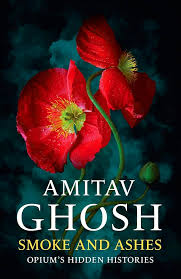
Amitav
Ghosh, a famous Bengali writer and the winner of 54th Jnanpith
award, has many novels to his credit. His book Smoke and Ashes: A Writer’s Journey Through Opium’s Hidden Histories
is a travelogue in which he traces out the spread of opium trade among the
three important nations namely, China, India and Britain. In fact, it is a
socio-historic novel. He delves deep into the transformative effect that the
trade had produced in these three countries in particular and the whole world
in general. In the eighteenth and nineteenth centuries, India had witnessed the
rampant growth of opium at various places within the country under colonial
rule, and its lasting effects on the people. Now-a-days, human beings are
facing potential threats from many quarters. Man and his craving for wealth is
the biggest threat to the environment. It not only spoils nature but also
corrupts himself to the core. I have
selected this prolific writer’s non-fiction out of concern for nature and human
destiny.
Key Words:
travelogue, delves deep, transformative effect, rampant growth, biggest threat,
human destiny
VOL- 9, ISSUE- 3, PUNE RESEARCH WORLD (ISSN 2455-359X) JIF 3.63
9.3.2 WORLD
Colaba, Mazgaon, Old Woman's
Island (Little Colaba), Wadala, Mahim, Parel, and Worli were the original seven
islands that made up city of Mumbai. These island clusters have been connected
by an amount of reclamations. There were fishing colonial populations on each
of the seven islands that would become Mumbai. The seven islands of Bombay,
which were Portuguese possessions off the coast of India in the 16th century,
were given to England under this name as part of Catherine of Braganza's dowry
when she wed Charles II in 1661. Before the Portuguese took control of the
islands in 1534, they had previously been a part of indigenous empires like
those of the Silhara dynasty and the Sultan of Gujarat. Charles II leased the
islands to the East India Company in 1668 for 10 pounds of gold per year after
receiving them as dowry. The islands have been combined into a single continent
by 1845 thanks to several land reclamation initiatives.